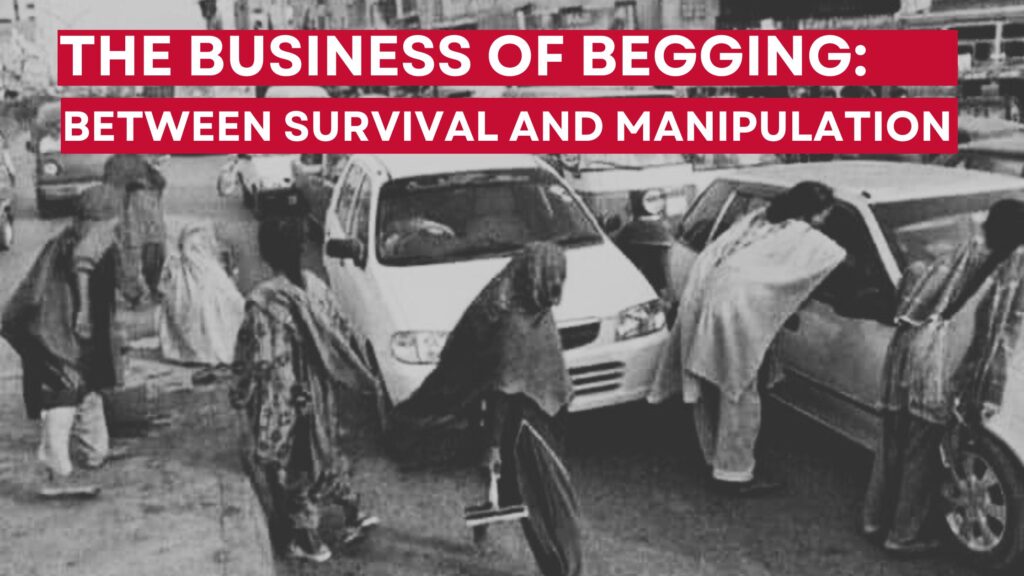
Begging has long been a common sight on the streets of Pakistan, but recent studies in Mandi Bahauddin reveal something interesting. Behind stretched hands and poor faces there is a system that is full of exploitations, addiction and organized crimes.
Children are the most vulnerable victims of this cycle. Some children spend nights on the streets without the permission of their parents, while others are pushed into this exploitation by their guardians. In some cases children are moved from one place to another without their parents showing patterns that resemble trafficking. For many begging is not an option its a way of survival, leaving them trapped between child labour and life on the streets.
For many families, begging is not a profession but an unwanted last resort. When regular income is not enough their needs push them onto the streets. In other cases the people carrying the burden of disability start begging as a way of survival. Yet the problem goes far beyond survival. Some cases reveal that many organised groups operate begging as a system, these groups have controlled movements, stories that repeat, and the practice is more like a business than survival.
Slum areas show how deeply begging becomes part of their daily life. Generations grow up seeing their parents begging and considering this as a way of living. In such places, begging is not just a choice but a curse, from parents to children.
Drug addiction makes the issue even worse. Addicts use begging just to fund their addiction, because their families stop the financial sport for their betterment but they start to rely completely on the coins they collect. These people are turning begging into a way to pay for drugs.
Disability adds further complexity. Many disabled people beg for genuine need, while others use or exaggerate disability to gain sympathy and earn more money. This manipulation between survival and crime makes it difficult for society to separate truth from fraud. The real challenge for society is not just to offer charity. Without stronger actions, the child who is beggar today may turn into an addict, victim of trafficking or permanent member of the slum economy. The cycle will keep passing from one generation to the next. At the same time, genuine case loss sympathy because begging linked to disability or needs is often misused.
All of this shows that begging cannot be explained by poverty alone. It is a combination of family struggles, organized exploitation, addiction and generational cycles. Some beggars are trapped by poverty and others by the network that makes profit from their presence on the street.
Begging is way more than just the stories of hardship. It is a warning that shows how easily vulnerability can turn into exploitation. Breaking this cycle needs actions that targets the real cases – dismantling organized networks, protecting children, giving families alternatives and helping addicts to recover. Unless such measures are taken, the cycle will continue and the children will remain trapped in streets “while each day of neglect tightens the chains around them”.

Shahzaib Hassan
Co-author and research assistant of this article