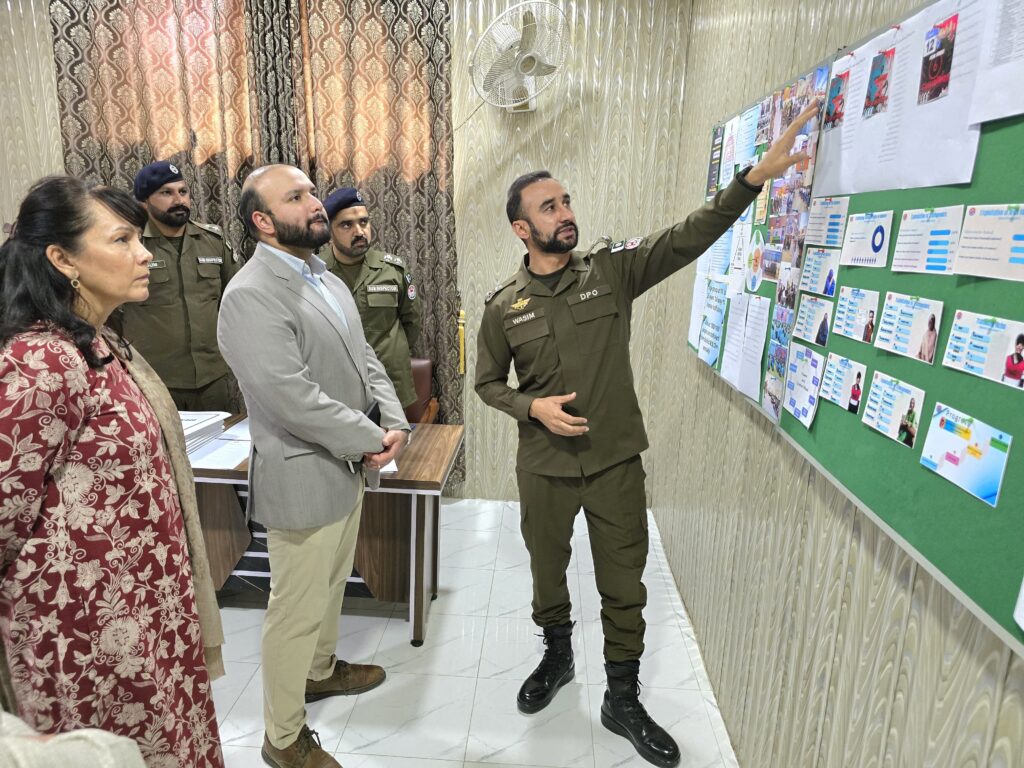
In a historic move to strengthen the fight against human trafficking, Mandi Bahauddin’s Anti-Human Trafficking Cell (AHTC) has been officially recognized as a pioneering model for the entire province of Punjab. Following a landmark meeting of Special Committee No. 8 on January 22, 2025, it was announced that the exceptional approach of Mandi Bahauddin’s AHTC would be replicated across all District Police Offices (DPOs) in Punjab. This transformative initiative is set to be fully implemented by February 28, 2025, with continuous progress reports being submitted to the committee for ongoing evaluation and adjustment.
A Beacon of Excellence: Establishing a Provincial Standard in Combatting Human Trafficking
The AHTC in Mandi Bahauddin has quickly established itself as a paragon of success in the battle against human trafficking. Through its innovative strategies, remarkable results, and unwavering dedication, the cell has set an extraordinary benchmark for what can be accomplished when coordinated efforts are focused on this critical issue. Recognizing the profound impact of the AHTC’s work, the provincial government has committed to expanding this model across Punjab, ensuring that all districts benefit from the same high-standard framework in the fight against human trafficking.
Key Achievements of Mandi Bahauddin’s AHTC
1. A Proven, Scalable Model for Provincial Implementation
The success of Mandi Bahauddin’s AHTC has proven that a well-coordinated, multi-dimensional approach can yield transformative results. The cell’s outstanding achievements in rescuing victims, dismantling trafficking networks, and prosecuting offenders have proven the effectiveness of its model. The provincial government, recognizing its success, has decided to replicate this model across all DPOs in Punjab, ensuring that the same high standards of operation, victim protection, and accountability are upheld.
2. Synergistic Collaboration for Victim Protection and Justice
The remarkable success of Mandi Bahauddin’s AHTC is a direct result of its seamless collaboration with various stakeholders, including law enforcement, government agencies, and civil society organizations. This integrated approach has enabled the swift identification, rescue, and rehabilitation of trafficking victims, while ensuring that perpetrators face justice. By extending this model of collaboration to all districts in Punjab, the provincial government is creating a cohesive, province-wide network that will strengthen its ability to tackle human trafficking in all its forms.
3. Transparent Monitoring and Rigorous Reporting
To ensure that the initiative remains on track and continues to deliver results, the provincial strategy includes the submission of monthly reports by district vigilance committees. These reports will track the number of human trafficking cases, assess the effectiveness of anti-trafficking programs, and provide updates on migrant smuggling activities. By employing a data-driven approach, the provincial government will be able to monitor progress, identify emerging challenges, and make informed, real-time adjustments to strategies.
4. Centralized Data Collection for Informed Policy Development
A key feature of the expanded initiative is the creation of a centralized database to track human trafficking activities across Punjab. This comprehensive system will provide the government with real-time data on trafficking networks, victim profiles, and emerging trends. By consolidating this information, the provincial government will be able to make data-driven policy decisions, design targeted interventions, and effectively address trafficking at its roots.
5. Strong Legislative and Governmental Support
The initiative has received overwhelming support from the Provincial Assembly of Punjab, with an official memorandum directing the immediate replication of Mandi Bahauddin’s AHTC model in all districts. This robust legislative backing reflects the provincial government’s unwavering commitment to eradicating human trafficking and ensuring the protection of vulnerable populations. The united support from both the executive and legislative branches underscores the importance of this initiative and the collective resolve to tackle human trafficking head-on.
The Road Ahead: A Unified, Coordinated Provincial Strategy
The adoption of Mandi Bahauddin’s AHTC model across Punjab marks the beginning of a comprehensive, province-wide strategy to combat human trafficking. By adopting a standardized approach, the provincial government ensures that every district will have the infrastructure, training, and resources required to tackle trafficking effectively. This coordinated strategy will not only focus on victim rescue and rehabilitation but also on dismantling trafficking networks, prosecuting offenders, and raising public awareness to prevent future exploitation.
A New Era of Protection and Justice for Punjab’s Vulnerable Populations
The expansion of the AHTC model offers renewed hope to the countless individuals who remain vulnerable to exploitation. The province is poised to make significant progress in dismantling trafficking networks, providing victims with essential support, and creating safer communities. As the Mandi Bahauddin model is replicated across Punjab, the initiative will create a unified, multi-layered response to human trafficking, where every district is empowered to protect its residents from the scourge of exploitation.
A Lasting Legacy of Justice, Dignity, and Commitment to a Safer Future
This initiative is not only a commitment to immediate action but also a promise of long-term, sustainable change. By scaling the Mandi Bahauddin AHTC model across Punjab, the provincial government is not only addressing the current needs of trafficking victims but also laying the foundation for sustainable, systemic change. The AHTC’s success serves as a testament to the power of collaboration, strong leadership, and an unyielding dedication to human rights.
As the provincial government continues to expand this initiative, it will set a powerful example for other regions and countries to follow. The bold steps taken by Punjab are a clear demonstration that with collective effort, informed decision-making, and a steadfast commitment to justice, human trafficking can be eradicated. Through this initiative, Punjab is not just fighting against human trafficking—it is shaping the future of justice, dignity, and protection for its citizens.