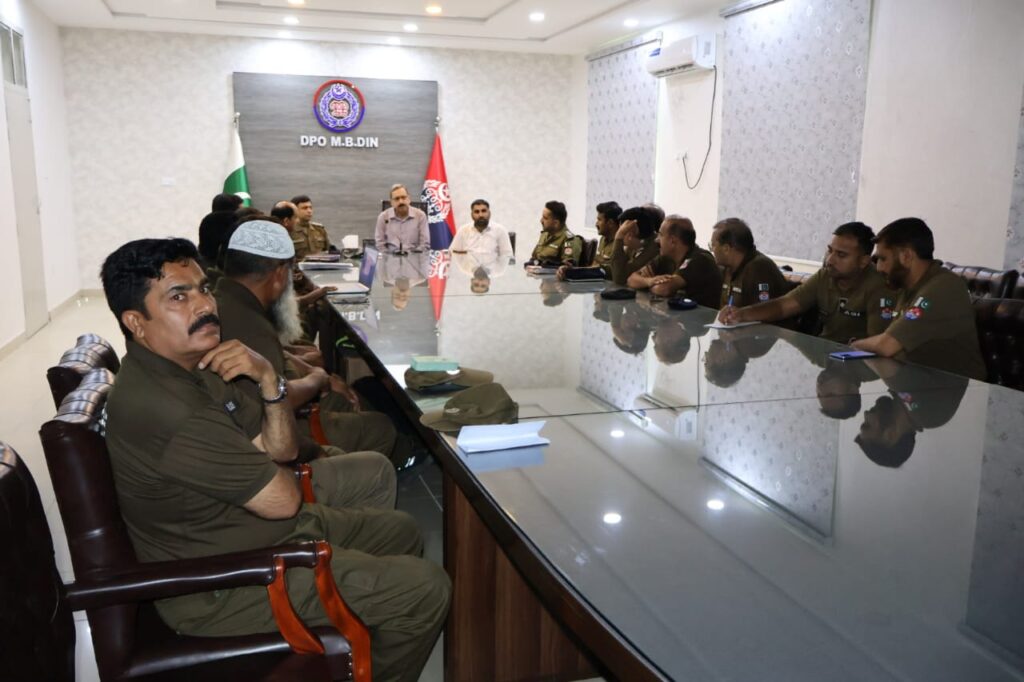
The Mandi Bahauddin Police, in collaboration with the prosecution department, recently organized a comprehensive orientation workshop on Human Trafficking Investigation. This session was designed to build the capacity of law enforcement officers, enhance coordination with prosecution, and strengthen community outreach efforts to effectively combat modern slavery. District Public Prosecutor, ADPPs, DSP Legal, and Investigation Officers were the key participants.
Understanding Human Trafficking
The workshop began by clarifying what constitutes human trafficking: the recruitment, transportation, harboring, or receipt of persons through force, fraud, or coercion. Participants were introduced to the major forms of exploitation, including sexual exploitation, forced labor, organ harvesting, forced marriage, and domestic servitude. It was highlighted that globally, trafficking affects more than 50 million people, generating over $150 billion annually for criminal networks.
Recognizing the Signs
A central part of the training focused on equipping officers to identify potential victims. The discussion covered:
-
Physical indicators such as signs of abuse, malnourishment, and untreated medical conditions.
-
Behavioral signs like fear, scripted responses, confusion about location, or reluctance to speak.
-
Control mechanisms traffickers use, including confiscated identification, restricted movement, and debt bondage.
The session stressed that victims often do not self-identify due to trauma, fear, or coercion, making law enforcement vigilance essential.
Legal Framework: Prevention of Trafficking in Persons Act, 2018
Participants received detailed guidance on the Prevention of Trafficking in Persons Act, 2018, which provides a unified framework for prevention, protection, and prosecution. The law strengthens penalties with rigorous imprisonment up to 14 years and fines up to Rs. 2 million, while mandating victim rehabilitation, repatriation services, and witness protection.
Sections 3 and 4 of the Act were discussed in depth, outlining punishable offenses such as recruitment through deception, transportation for exploitation, and harboring of victims.
Police Role in Combating Trafficking
The workshop emphasized the critical role of police officers in combating trafficking:
-
Immediate response: registering FIRs without delay, securing the crime scene, and ensuring victim safety.
-
Victim protection: arranging immediate medical care, secure accommodation, and trauma-informed support.
-
Investigation: gathering evidence, identifying trafficking networks, and working with specialized units and NGOs.
-
Legal process: maintaining proper documentation, ensuring witness protection, and supporting effective prosecution.
Building Public Awareness
Beyond enforcement, participants discussed the importance of prevention through awareness. Strategies included:
-
Community outreach via workshops, local leaders, and public campaigns.
-
Educational programs to integrate trafficking awareness into schools, colleges, and training institutes.
-
Digital campaigns using social media, mobile apps, and helplines to spread awareness and reach vulnerable groups.
Addressing Root Causes
The workshop concluded with a call to address the underlying vulnerabilities that make individuals susceptible to trafficking—poverty, unemployment, and lack of education. Strengthening inter-agency collaboration with labor departments, border security, and international partners was also recognized as key to long-term solutions.
A Shared Commitment
The session ended with a powerful message:
“Every rescued victim is a victory for justice, every prevented case is a triumph for humanity.”
The workshop not only strengthened the capacity of police and prosecution officers but also reinforced Mandi Bahauddin Police’s commitment to leading the fight against trafficking. By aligning legal enforcement with community awareness, the district is taking bold steps toward a future where every individual’s freedom and dignity are safeguarded.